




In various rice-producing regions of Ghana, such as Fumbisi in the Upper East Region, Nasia in the North East, and Ohiamadwen in the Western Region, farmers are observing large quantities of bagged paddy rice sitting unused in storage facilities. This season has seen one of the largest surpluses of locally produced rice in years, yet many bags remain without buyers.
The government attempted to address this surplus with GHS 200 million, but the National Food Buffer Stock Company has referred to this amount as merely a “drop in the ocean,” noting that they needed approximately GHS 700 million to purchase excess rice and maize.
Paradoxically, while Ghana currently possesses more rice than it can utilize in the short term, the nation is facing a significant shortage of tomatoes. Markets are abundant with plantain, cassava, and garden eggs, but fresh tomatoes are lacking and high-priced. These two contrasting scenarios illustrate a food system that fluctuates between surplus and scarcity, creating pressure for both farmers and consumers.
This feature explores how Ghana arrived at this troubling imbalance, why rice farmers are struggling to survive even amid bumper harvests, and why tomatoes remain out of reach for many households.
A Country of Contradictions: Abundance of Rice, Scarcity of Tomatoes
The term “glut” has frequently appeared in discussions about food in Ghana, and it is particularly evident in the country’s rice sector today. Several regions have experienced bumper harvests, especially following years of consistent cultivation through agricultural programs and the expansion of irrigated rice fields. However, without enough buyers, processors, or storage facilities, the production has exceeded market demand. Farmers in Fumbisi, for example, report that out of thousands of bags harvested, only a small fraction has been purchased by market actors.
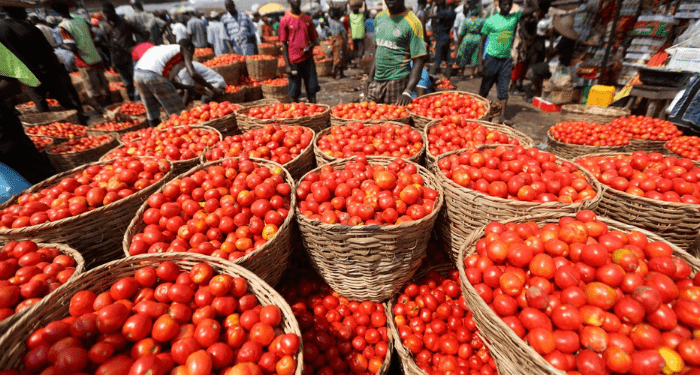
In contrast, tomatoes—one of the most widely consumed vegetables—are currently scarce. In major markets in Accra and Kumasi, traders display large quantities of cassava, plantain, and garden eggs, but offer only limited amounts of tomatoes at high prices. A small bowl of tomatoes can cost more than an entire bunch of plantain. Furthermore, in September 2025, the government intervened by purchasing 1,000 boxes of tomatoes and 2,000 bags of onions from farmers in the Ashanti Region due to an oversupply.
The market appears to be sending two conflicting messages: Ghana is struggling to manage abundance and is unable to prevent scarcity.
Rice Surplus: How We Produced Excess Without a Market
This year’s rice glut is the climax of several intersecting factors:
1. Increased Production Motivated by Past Success
In previous years, strong demand for local rice encouraged many farmers to expand their cultivation areas. Government programs, such as Planting for Food and Jobs (PFJ), along with improved seed varieties and enhanced irrigation systems in projects like Tono and Vea, significantly increased production. Farmers made substantial investments in fertilizers, labor, and equipment rentals, anticipating a profitable season.
2. Insufficient Storage and Processing Capacity
Ghana is actively working to encourage the consumption of local rice; however, the country continues to face challenges due to insufficient milling and storage facilities. Furthermore, the absence of a reliable warehouse receipt system makes it difficult for farmers to store paddy for future sales or use it as collateral for financing.
3. Competition from Imported Rice Varieties
Despite numerous campaigns promoting “Eat Ghana Rice,” imported rice still dominates the market. Urban consumers often prefer the uniformity and appearance of imported brands, which makes it challenging for local rice to compete. This season, rice importers have not reduced their activity, leading to a situation where farmers are facing both oversupply and weaker demand for their products.
Why Tomatoes Are Scarce: Seasonal and Structural Realities
If rice shows Ghana’s problem with abundance, tomatoes show its ongoing struggle with scarcity. Tomato production faces a unique set of challenges that make the country chronically dependent on imports.
1. Seasonal Production and Climate Pressures
Tomato farming in Ghana is tied to specific cycles. Regions like Akomadan, Tuobodom, and the northern irrigation schemes produce tomatoes only during peak seasons when conditions are right. This year, irregular rainfall and heat waves disrupted expected yields. Pest outbreaks, especially the notorious Tuta Absoluta in Nigeria, wiped out large acres of tomato farms.
2. Dependence on Imports From Burkina Faso and Niger
Ghana relies heavily on fresh tomatoes from Burkina Faso and Niger during the lean season. When production or logistics issues hit those countries, Ghana feels the pinch immediately. Recent insecurity and high transport costs on the Burkina Faso–Ghana corridor have limited supply and increased spoilage.
3. Weak Local Production Systems
Tomato farmers currently operate in an environment where: irrigation systems are inadequate, farm inputs are unaffordable, storage systems are non-existent, and market linkages are weak.
The Root of Ghana’s Food Imbalance
Ghana’s seasonal food imbalance, excess of some crops and shortage of others, comes from deeper systemic gaps.
1. Poor Market Forecasting
Farmers often make production decisions based on the previous year’s prices rather than data-driven projections. If plantain or rice sold well last year, many switch to it, creating oversupply the following year.
2. Limited Storage and Processing
Ghana loses between 30 and 50 percent of fresh produce annually due to weak storage infrastructure. When gluts occur, these losses worsen. Without cold-chain systems or warehousing, produce floods the market at once, causing prices to fall.
3. Fragmented Value Chains
While some crops like rice require structured buyers and processors, many farming regions operate without organised market linkages. The tomato sector is especially vulnerable because of lack of processing factories after the collapse of facilities like the Pwalugu Tomato Factory.
4. Over-Reliance on Regional Imports
For tomatoes especially, overdependence on Burkina Faso and Niger exposes Ghana to external risks. A disruption there immediately destabilises supply here.
How the Glut and Scarcity Affect Farmers and Consumers
Despite bumper harvests, many farmers are struggling. Some are forced to sell below cost just to clear their fields, while others watch crops rot in the absence of proper storage. At the same time, urban consumers are paying the price, tomatoes are expensive, pushing households to rely on substitutes like tomato paste or garden-egg stews.
Traders, struggling with high spoilage rates, unstable bulk prices, and rising transport costs, pass these expenses on to shoppers. The result is a distorted market where farmers lose, and consumers don’t necessarily gain.
What Experts Say
Agricultural economists argue that Ghana’s problem is not production capacity but coordination and infrastructure. The Chief Executive Officer of Agri-Impact, Daniel Fahene Acquaye, has urged the government to adopt long-term policies rather than temporary interventions that ensure consistent support for local rice, maize, and poultry producers.
Some tomato traders say stabilising the Burkina Faso trade route is essential for short-term relief, but long-term solutions like storage and proper logistics would reduce heavy losses. Without these, they warn that even abundant.
The Way Forward: A More Balanced Food System
1. Government Purchase and Buffering of Surplus Rice
Purchasing locally grown food for school feeding programs, buffer stocks, and institutional consumption can help stabilize prices and reduce waste. President Mahama has instructed public institutions to prioritize locally produced food in order to absorb the current surplus harvest. Schools and prisons are now mandated to source all their food locally. Additionally, excess eggs and grains are being allocated to the School Feeding Program to support farmers and assist them in recouping their investments.
2. Expand Irrigation and Greenhouse Cultivation for Tomatoes
Expanding irrigation in key tomato-growing regions such as Akomadan, Afram Plains, Tono, and Vea is one of the most effective ways to ensure year-round production and mitigate Ghana’s ongoing tomato shortages. The failure of the Pwalugu Irrigation Project, which left farmers reliant on rainfall, serves as a reminder of the consequences when such investments are neglected.
3. Invest in Storage, Milling and Processing Facilities
Modern rice mills, cold storage facilities, and reactivation of tomato processing factories are essential to balance the market.
4. Implement a National Crop Forecasting System
A centralised agricultural data platform can guide farmers on the crops that will be profitable and prevent herd production.
5. Strengthen Regional Trade Routes
Formalising cross-border tomato trade can reduce logistics disruptions and stabilise prices for consumers.
Conclusion
Ghana’s simultaneous rice surplus and tomato scarcity highlight a food system that is struggling with coordination, infrastructure, and resilience. Farmers who should be celebrating their abundant rice harvests are seeking assistance, while consumers searching for basic tomato supplies are paying prices that are more than they can afford.
With careful planning, improved storage facilities, enhanced irrigation systems, and better market intelligence, Ghana can turn this situation around. By addressing these issues, the country can ensure that agricultural abundance leads to prosperity for farmers and stable prices for consumers.


